The Complete Guide for IGCSE Chemistry in 2026
In one session we draw the whole year on one timeline: the important dates from September to the June 2026 exams, the three exam papers decoded, the weekly study recipe that actually works — and a live mini-lesson so you feel how the subject is taught.
For IGCSE Chemistry students sitting the June 2026 exams — and their parents.
Free · takes 20 seconds · your personal join link arrives by e-mail
What you’ll learn
The September → June timeline
Four realistic steps with real dates: 60% of the syllabus done by December, a mock in January, everything finished by early March — then full revision, past papers and mind maps until the finals.
The three exam papers, decoded
Paper 4 (50%), Paper 2 (30%) and the practical Paper 6 (20%) — how each is marked out of 200, the exam order, and why Paper 6 must never be left to the end.
The study recipe that sticks
The four-step weekly loop: lesson → 30-minute revision within 48 hours → twice as much solving as reading → weekly quiz. Simple, and it has worked for 20 years.
How parents stay in the loop
Weekly quiz grades, homework submitted (or copied!), monthly test results and a progress report every Friday — so you always know exactly where your child stands.
Who it’s for
Your exams are about 9 months away — this is exactly when the plan has to start.
See the whole subject in minutes — every topic from states of matter to organic chemistry.
Understand the papers, the year plan, and how progress is tracked week by week.
The session, step by step
The important dates
Two classes a week from 7 September, weekly quizzes, monthly tests, the January mock, and revision from 3 March.
How the exams are structured
The three papers, their weights and their dates — so you can plan the year backwards from the finals.
Best study tips
Study techniques that change how you approach the subject — including why solving beats re-reading every time.
Live mini-lesson + your questions
The first lesson of the course — states of matter — taught for real, then I answer everything you ask, live.
The numbers we’ll go through
Written questions · 80 marks · 50% of your grade · sat at the end of April. An honest 50%: you study, you get the result.
Practical chemistry · 40 marks · 20% · first half of May. The paper that separates a good student from the best — the skills must be built gradually, not crammed.
40 questions · 30% · sat in June, always last — so you get the most practice time for the paper most students find trickiest.
Everything adds up to 200 marks. Last year an A* needed about 167 out of 200 — you can drop 33 marks and still take it. Majority of prepared students score an A or A*.
How it works
 Register in 20 seconds
Name + e-mail. Your personal join link arrives straight away.
 Join live in your browser
Phone or laptop, no Zoom app, no install — just tap the link at 5 PM.
 Leave with a plan
A dated timeline to June 2026, the paper strategy and a weekly routine that works.
Your teacher

Hosni
Author of 8 published textbooks. 20+ years teaching Chemistry & Biology and Head of Science. Every year for 20 years his IGCSE classes finish the syllabus by early March — with time to revise properly. He built chem-bio.info to help students learn the way examiners think.
Reserve your free place
Sunday 30 August · 5:00 PM Kuwait time · live on Zoom in your browser. Parents are welcome to register too.
The resources we’ll talk about
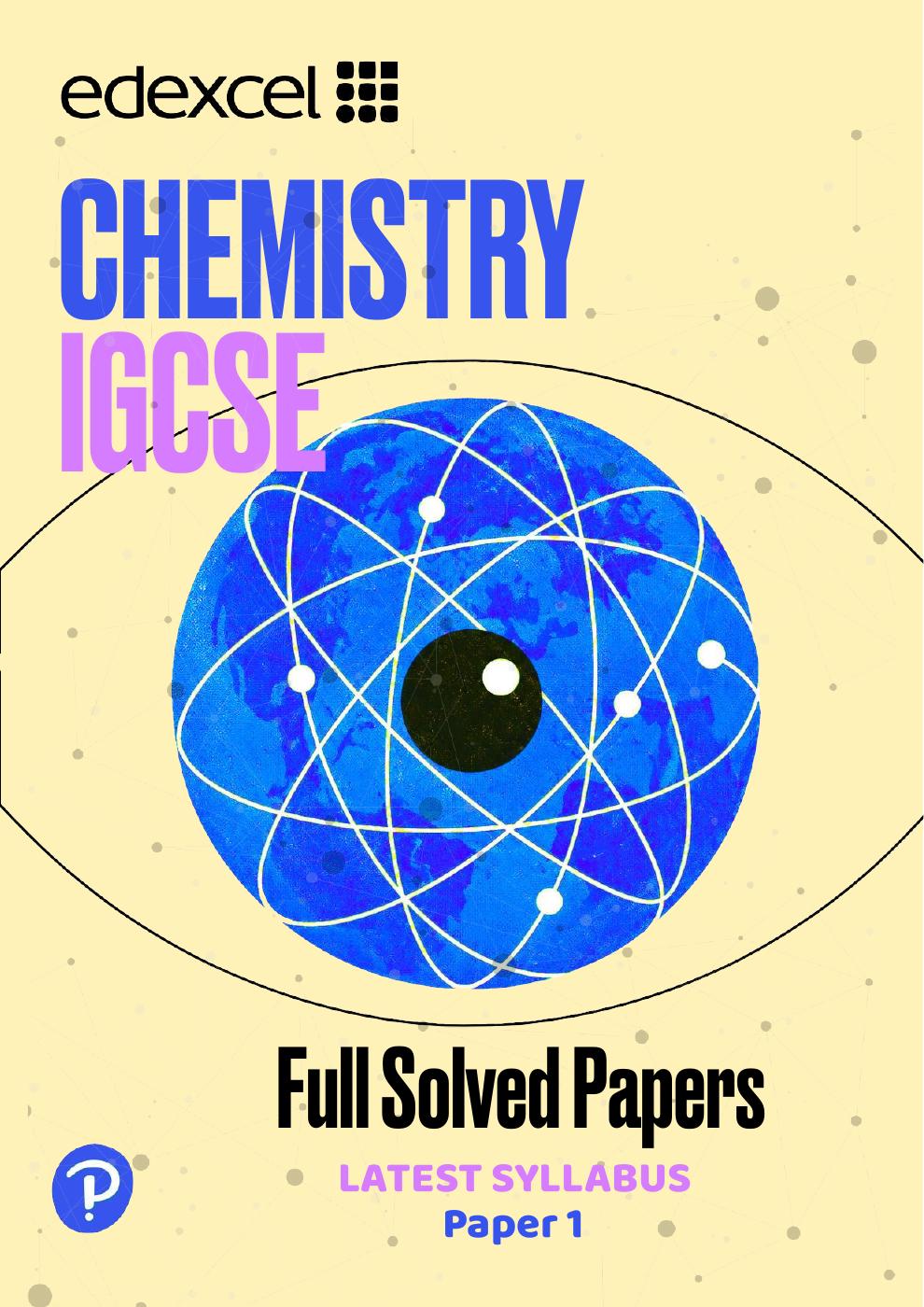
Every IGCSE Chemistry paper, solved step by step
The fully solved past papers — full working for the multiple choice, every mark-scheme point on the written questions, and the calculations broken into baby steps.
Get the Solved Past Papers → See the IGCSE Chemistry Notes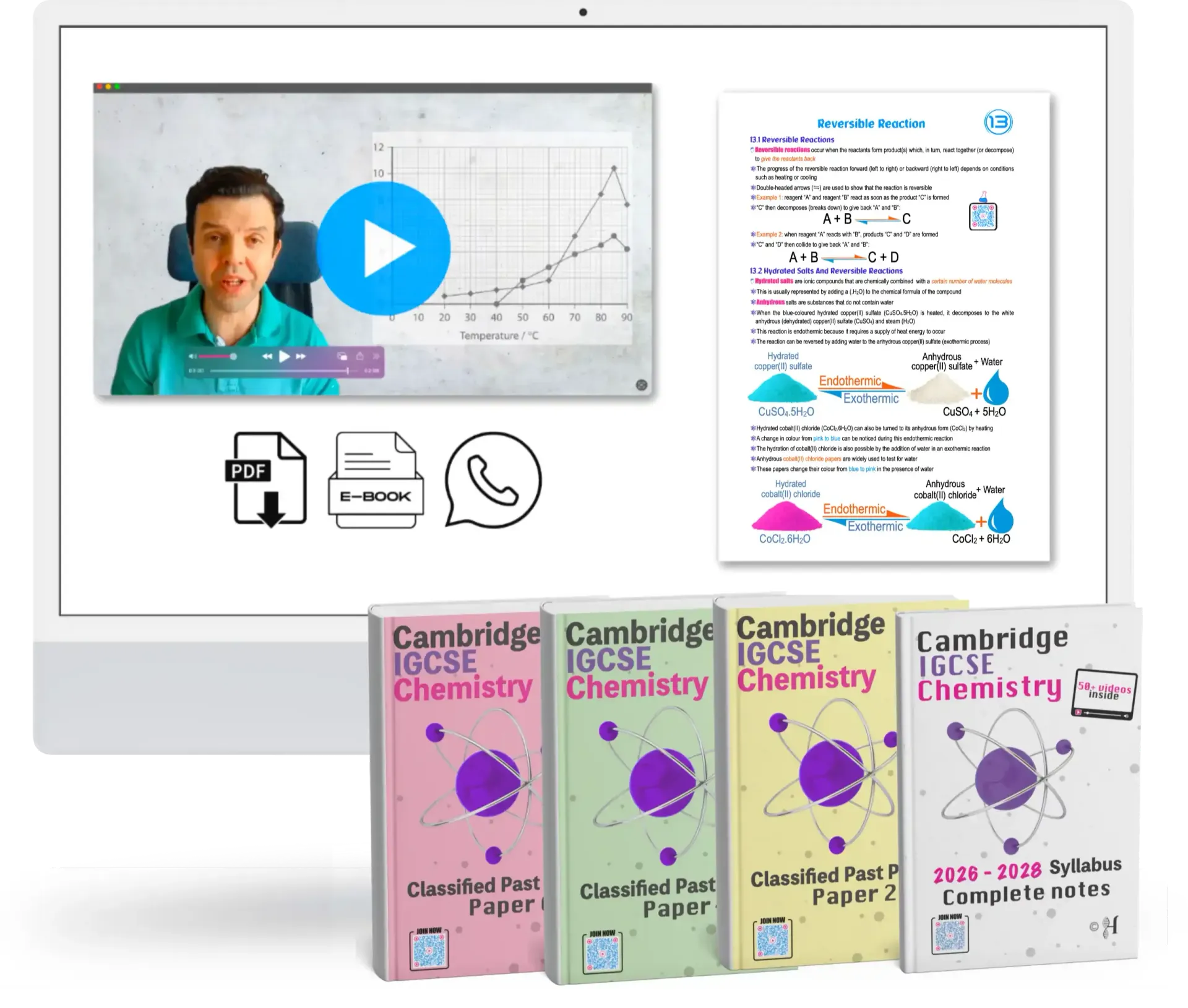
Turn the timeline into an A*
The complete IGCSE Chemistry course: two live classes a week, notes in mark-scheme language, weekly quizzes, monthly tests, marked homework, mock exams — and a progress report to parents every Friday.
IGCSE Chemistry Course → Join Live IGCSE Chemistry ClassesFree first: read the IGCSE Chemistry specification explained, check what’s new in the 2026 syllabus, and follow the IGCSE Chemistry 2026 revision guide.
What students say
“The solved past papers showed the full working for the multiple-choice items and listed every mark-scheme point. The answers were crystal clear, so I finally understood how to earn marks. I used the revision questions the week before the exam and finished with an A.”
Faris Al-Qahtani · Saudi Arabia“Clear, step-by-step solutions — plus wording that matches all mark-scheme points. The pack encouraged consistent practice and active recall; my long written answers improved and I scored an A.”
Hind Al-Nuaimi · United Arab Emirates“Loved how the MCQs were solved with full working — now I know why an option is right or wrong.”
Noora Al-Kuwari · Qatar“This course saved a lot of time — I used to look up the answers in the mark scheme. I used these questions along with the notes and it worked like magic.”
Mariam Khaled · Kuwait